Adv. PHP Course

Take your PHP skills to the next level with this Advanced PHP Course. Designed for developers with a basic understanding of PHP, this course dives deep into advanced concepts such as object-oriented programming (OOP), PHP frameworks (like Laravel), error handling, security best practices, working with APIs, and database optimization. Build scalable, secure, and high-performance web applications with hands-on projects and real-world coding scenarios.

thumb

Advanced PHP Development Course

Take your PHP development skills to the next level with this advanced course focused on building scalable, secure, and high-performance web applications. You will learn professional development techniques, advanced language features, design patterns, API integration, error handling, security enhancements, and production-level deployment. This course is designed to help you move beyond basic CRUD apps and start developing enterprise-grade solutions using modern PHP tools and workflows.

  • Object-Oriented PHP: Classes, objects, traits, interfaces, abstract classes
  • Advanced Database Handling: Joins, transactions, prepared statements
  • MVC Architecture: Theory, implementation, project structure
  • REST APIs: JSON responses, API routing, token handling
  • Security & Best Practices: SQL injection prevention, session security, XSS protection
  • Error Handling & Debugging: Logs, exceptions, debugging tools
  • Working with Frameworks: Laravel / CodeIgniter basics
  • Project Work: Admin dashboard, API-based module, multi-user system

This practical, project-driven course prepares you for real industry requirements, including advanced database operations, MVC architecture, object-oriented programming, reusable class design, and working with frameworks such as Laravel or CodeIgniter. You will also learn modern practices such as version control (Git), REST API development, debugging, package management, and integration with third-party services. By the end, you'll be ready to handle real-world backend challenges and contribute confidently to professional development teams.

What will I learn?

  • Design maintainable and scalable web applications using OOP and MVC
  • Build and consume REST APIs for real-world systems
  • Implement modern security practices and error handling
  • Work with PHP frameworks for faster development
  • Create production-ready applications and deploy them

Requirements

  • Strong understanding of basic PHP
  • Prior knowledge of HTML, CSS, and MySQL
  • Willingness to learn advanced backend concepts

Adv. PHP Course Content

PHP Introduction
  • What is PHP?
  • What is a PHP File?
  • What Can PHP Do?
  • Why PHP?
  • What's new in PHP 7
PHP Installation
  • What Do I Need?
  • Use a Web Host With PHP Support
  • Set Up PHP on Your Own PC
Basic Concepts
  • PHP Syntax
  • PHP Comments
  • PHP Variables
  • PHP echo and print Statements
  • Variables
PHP Data Types
  • PHP String
  • PHP Integer
  • PHP Float
  • PHP Boolean
PHP Strings
  • Modify Strings
  • Concatenate Strings
  • Slicing Strings
  • Escape Characters
PHP Numbers
  • PHP Numbers
  • PHP Integers
  • PHP Integers
PHP Casting
  • Cast to String
  • Cast to Integer
  • Cast to Float
  • Cast to Boolean
  • Cast to Array
  • Cast to Object
  • Cast to NULL
PHP Math Functions
  • PHP pi() Function
  • PHP min() and max() Functions
  • PHP abs() Function
  • PHP sqrt() Function
  • PHP round() Function
  • Random Numbers
PHP Constants
  • PHP const Keyword
  • PHP Constant Arrays
  • Constants are Global

PHP Magic Constants

PHP Operators
  • Arithmetic operators
  • Assignment operators
  • Comparison operators
  • Increment/Decrement operators
  • Logical operators
  • String operators
  • Array operators
  • Conditional assignment operators
IF..ElSE...ELSEIF
  • PHP if Operators
  • PHP if...else Statements
  • PHP Elseif
  • Nested if
  • Switch
PHP Loops
  • PHP while Loop
  • PHP do while Loop
  • PHP for Loop
  • PHP foreach Loop
  • PHP Break Statement
  • PHP Continue Statement
PHP Functions
  • PHP Built-in Functions
  • Call a Function
  • PHP Function Arguments
  • PHP Default Argument Value
  • PHP Functions - Returning values
  • Passing Arguments by Reference
  • Variable Number of Arguments
  • PHP is a Loosely Typed Language
  • PHP Return Type Declarations
PHP Arrays
  • PHP Indexed Arrays
  • PHP Associative Arrays
  • PHP Create Arrays
  • PHP Access Arrays
  • PHP Update Array Items
  • PHP Add Array Items
  • Remove Array Item
  • PHP Sorting Arrays
  • PHP Multidimensional Arrays
  • PHP Array Functions
PHP Global Variables - Superglobals
  • PHP $GLOBALS
  • PHP - $_SERVER
  • PHP - $_REQUEST
  • PHP - $_POST
  • PHP $_GET
PHP Regular Expressions
  • Using preg_match()
  • Using preg_match_all()
  • Using preg_replace()
PHP Forms
  • PHP Form Handling
  • PHP Form Validation
  • PHP Forms - Required Fields
  • PHP Forms - Validate E-mail and URL
  • PHP Forms - Validate E-mail and URL

Advanced PHP

Advanced Arrays & Array Functions
  • Recursive arrays
  • Array filtering, mapping
  • Higher-order functions for arrays
  • Array of objects, reference vs value
Advanced String Handling & Regex
  • Regular expressions in PHP (preg_match, preg_replace, etc)
  • Multiline strings, heredoc/nowdoc syntax
  • String encoding, Unicode considerations
Filters & Sanitization (Input Validation)
  • Using PHP filter functions (filter_var(), filter_input())
  • Advanced filter options and flags
  • Preventing common security issues (XSS, injection)
Error Handling & Exceptions
  • set_error_handler, trigger_error
  • Try/catch blocks, throwing exceptions
  • Custom exception classes
  • Logging errors, displaying errors vs hiding in production
Object-Oriented PHP (OOP)
  • What is OOP? Classes, Objects
  • Defining classes, properties, methods
  • Inheritance, interfaces, abstract classes
  • The $this keyword, instanceof
  • Magic methods (__construct(), __destruct(), __get(), __set(), etc)
  • Namespaces, Traits (if applicable)
Working with Dates & Times
  • DateTime class, formatting dates
  • Timezones, intervals
  • Timestamp vs human readable date
  • Using date/time functions for business logic
Sessions & Cookies
  • Starting sessions (session_start())
  • Storing and accessing $_SESSION variables
  • Setting cookies, reading cookies, expiry, path/domain
  • Session security (session fixation, hijacking)
Filesystems & Directories
  • Directory operations (scanning, creation, deletion)
  • Path handling, permissions
  • File metadata (size, last modified)
  • Handling large file uploads / chunking
AJAX with PHP & MySQL
  • Sending asynchronous requests (via JavaScript/fetch/XHR)
  • PHP endpoint responding with JSON/XML
  • Integrating with database backend
  • Updating UI dynamically without full page reload

PHP + MySQL (Database Integration)

Introduction to MySQL with PHP
  • What is MySQL and why use it with PHP?
  • Relational database basics: tables, rows, columns
  • Setting up development environment (server + database)
Connecting PHP to MySQL
  • Using MySQLi (procedural and object-oriented)
  • Using PDO (PHP Data Objects)
  • Choosing between MySQLi vs PDO (pros/cons)
Creating Database & Tables
  • CREATE DATABASE statement
  • CREATE TABLE syntax using MySQLi/PDO
  • Defining primary key, auto-increment, data types, NOT NULL, DEFAULT
Inserting Data
  • INSERT INTO statement syntax
  • Using prepared statements to secure queries
  • Handling auto-increment fields, timestamps
Selecting/Retrieving Data
  • SELECT statement basics
  • Fetching results via associative arrays, objects
  • Looping through result sets
  • Displaying results in HTML (tables, lists)
Updating Data
  • UPDATE … SET … WHERE … syntax
  • Using WHERE clause to target specific rows
  • Using prepared statements, handling PDO/MySQLi variations
Deleting Data
  • DELETE FROM … WHERE … syntax
  • Using caution (impact of missing WHERE clause)
  • Soft delete vs hard delete patterns
Prepared Statements & Security
  • Soft delete vs hard delete patterns
  • Using PDO/MySQLi prepared APIs
  • Binding parameters, executing statements
  • Input validation, escaping output
Transactions & Error Handling
  • Starting transactions (BEGIN, COMMIT, ROLLBACK)
  • Error/exception handling during database operations
  • Ensuring atomic operations and data integrity
Integrating PHP Forms with MySQL
  • Collecting form input in PHP
  • Validating/sanitizing data
  • Inserting/updating data in database from form
  • Retrieving and displaying data based on form input
Advanced Database Operations
  • JOIN operations (INNER, LEFT, RIGHT)
  • Indexes, keys, performance tuning
  • Stored procedures/triggers (if applicable)
  • Bulk operations, batch inserts
AJAX + MySQL Integration
  • Using AJAX to fetch/update database without page reload
  • PHP endpoint to handle AJAX calls
  • JSON responses, error handling, asynchronous UI updates

Start Your Enrollment

We are variations of passages the have suffered.

Why Choose Us ?

Take your PHP skills to the next level with professional coding practices, powerful backend features, AJAX, APIs, and secure database-driven applications.

Career Opportunities After Advanced PHP Course

The Advanced PHP Course prepares learners for professional roles in backend web development and full-stack development. After completing this course, learners can work as Advanced PHP Developer, Full Stack Developer, Web Application Developer, CMS Developer, or Backend Programmer. This course builds strong practical knowledge in advanced PHP concepts, frameworks (like Laravel), database integration, APIs, and secure web application development — making you highly employable in corporate, startup, and freelance environments.

Advanced PHP Course Certification

Get Certified and Master PHP Development

  • Complete all modules covering advanced PHP syntax, OOP, MVC framework, and API integration.
  • Build and submit practical projects including dynamic web applications.
  • Pass the Advanced PHP Certification Exam to receive your official credential.

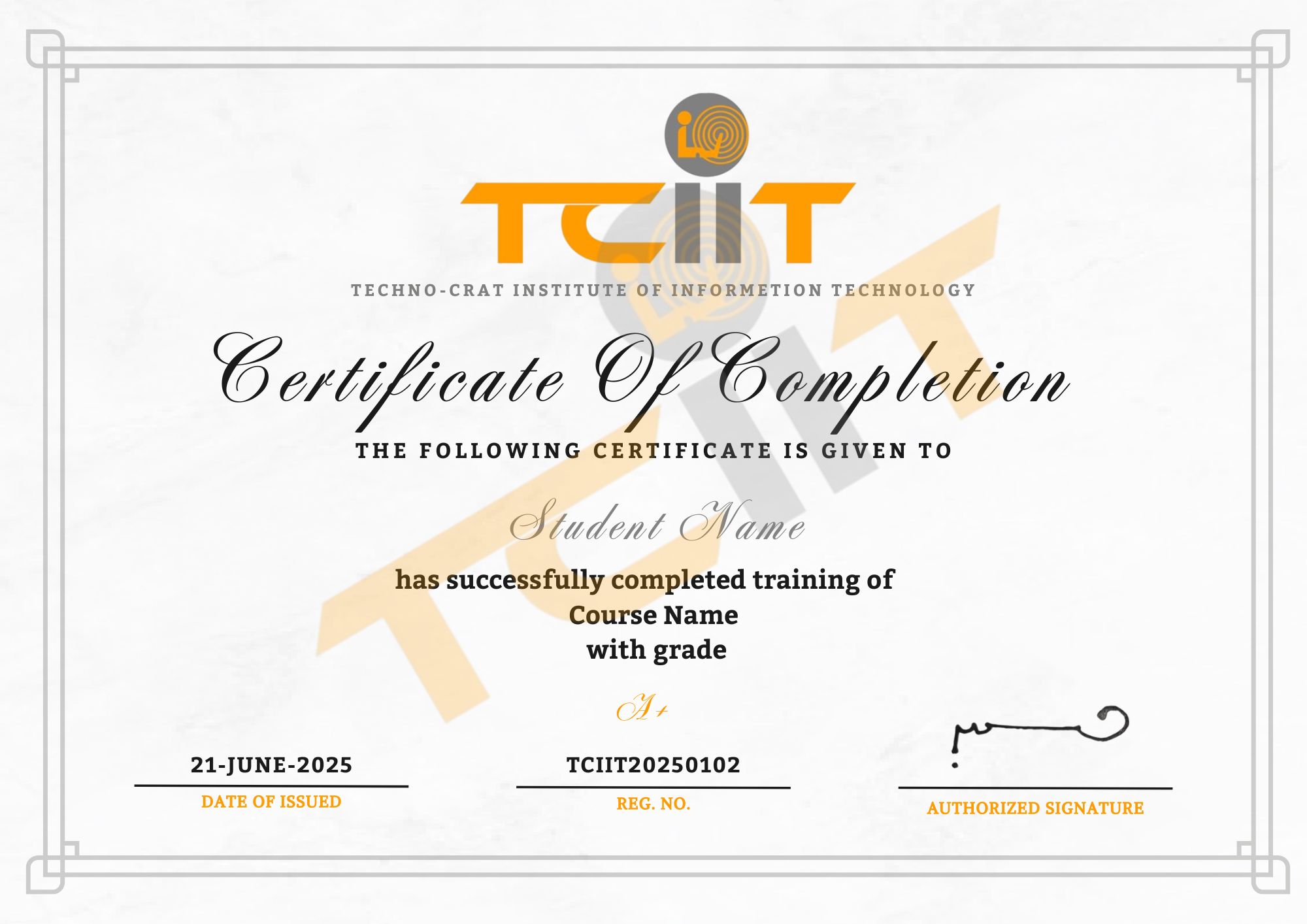
Upon successfully completing the Advanced PHP Course, you will receive a professional certificate through our Learning Management System (LMS). This certification validates your advanced PHP programming skills, database management, and ability to develop dynamic web applications — enhancing your career prospects as a skilled backend developer.
thumb
whatsapp